
In a warning sign for the Democrats, Indian-Americans' attachment to the party is declining in the United States while the share of Republican identifiers held steady.

'The cost of the lockdown so far is the loss of about 11 million jobs.' 'It is important that a fresh lockdown does not make this worse,' asserts Mahesh Vyas.

Recent documents by NITI Aayog and periodic labour force surveys on employment show that the importance of agriculture is rising in the Indian economy.

Whether nominal or real, India's investment rate needs to increase by 3 to 4 percentage points of GDP to support 8 per cent real growth, recommends Nikhil Gupta.

Growth in corporate profits needs to be commensurate with wages to boost the economy, Economic Survey 2024-25 said, noting that sharp disparities between the two pose risk to the economy by curbing demand. The document tabled in Parliament on Friday noted that while the labour share of GVA (gross value added) shows a slight uptick, the disproportionate rise in corporate profitsredominantly among large firmsaises concerns about income inequality.
'Some part could be used for consumption purposes, and the rest could be used to meet important financial goals.' 'The split can be 30:70 to 50:50, depending on one's situation.'

Budget 2025-26 delivers a carefully calibrated strategy-stimulating demand and investment while keeping fiscal discipline intact. In an environment marked by global trade disruptions, and a softening in urban consumption, Finance Minister Nirmala Sitharaman has taken a measured approach.

Mercedes-Benz India is looking at electric entry-level models to attract first-time luxury car buyers, as it sets eyes on another double-digit growth this year, its managing director and CEO Santosh Iyer said on Monday. The company, which launched all-electric entry SUV EQA 250 at an introductory price of Rs 66 lakh, has also introduced the new EQB 350 SUV (5-seater) priced at Rs 77.5 lakh and EQB 250+ SUV (7-seater) tagged at Rs 70.90 lakh (prices all India ex-showroom). It will also launch the EQS Maybach SUV and electrified G-Class models in India later this year.
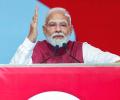
Prime Minister Narendra Modi asserted that his "vocal for local" campaign is bearing fruit as Indian products are going global and making their presence felt across the world. He said that India was becoming the land of infinite innovations, finding affordable solutions and offering them to the world. The prime minister also highlighted the country's rising defense products, electronics, automobile sector, and the success of superfoods, Ayush products, and yoga. He said India should be presented to the world as it is, without any bias. Modi said that the country was now emerging as a manufacturing hub and a "factory of the world." He added that India was creating solutions that were affordable, accessible, and adaptable, and offering them to the world without gatekeeping.

'Compare the new slabs with the previous years to understand if your tax liability will increase or decrease after the Budget.'

"The new structure will substantially reduce taxes on the middle class and leave more money in their hands, boosting household consumption, savings and investment," Sitharaman said presenting what was dubbed as 'reformist' budget for the next fiscal in Lok Sabha.

Earlier this month, the Central government said in a reply in Parliament it had taken measures to double farmers' income by the end of FY23 and the progress made so far indicated it was "on the right track". However, a close look at the data and at the assumptions made shows that as of now, it appears the country is unlikely to achieve the goal in real terms.

While this will incur a revenue loss amounting to 0.2 per cent of GDP, it will provide a strong boost to consumer sentiment and spending, points out Rajani Sinha.

Mental health experts and counsellors highlight how to identify early signs of distress in children and what parents and peers can do to prevent someone from taking their life.
Paraphrasing Abraham Lincoln, Finance Minister Nirmala Sitharaman on Sunday described the Union Budget as "by the people, for the people, of the people", and said Prime Minister Narendra Modi was fully behind the idea to cut taxes for the middle class but it took time to convince the bureaucrats. "We have heard the voice of the middle class" who had been complaining about their aspirations not being met despite being honest taxpayers, she told PTI in an interview.

The fall in urban sentiments in June is worrisome, observes Mahesh Vyas.
Finance Minister (FM) Nirmala Sitharaman has presented a forward-looking Budget, reinforcing the government's commitment to 'Reform, Perform, and Transform'.

'Understand how wedding expenses fit into your overall financial situation.' 'Evaluate how different levels of spending will impact other goals like retirement, travel, or housing.'

The RBI has changed the way it approached supervision in the past. Having seen a couple of collapses in the NBFC sector and the near-collapse of a few banks, it is focusing on regular drills to prevent a fire from breaking out, explains Tamal Bandyopadhyay.

'There is a misconception that gold is a dead asset in India.' 'Around 30 per cent of agriculture loans are collateralised by gold, Soumya Kanti Ghosh and Saket Hishikar, economists at the SBI, point out.

The developing-region cities of the City 600 will be home to an estimated 235 million middle-class households earning more than $20,000 a year at purchasing power parity (PPP) by 2025, points out a McKinsey study which maps the economic power of cities.
The Reserve Bank of India (RBI) on Monday allowed microfinance lenders to fix interest rates on loans with a rider that those should not be usurious for the borrowers. A microfinance loan is defined as a collateral-free loan given to a household having an annual income of up to Rs 300,000. Each regulated entity (RE) should put in place a board-approved policy regarding pricing of microfinance loans, said the 'Master Direction - Reserve Bank of India (Regulatory Framework for Microfinance Loans) Directions, 2022'. In the past, the central bank used to announce the rates on quarterly basis.

Almost 80 per cent of all income losses during the first wave of the pandemic in 2020 were incurred by the private sector in India, while in many other countries the entire loss was on respective governments, a report said on Wednesday. While the Centre had announced a Rs 21 lakh crore COVID-19 relief package, comprising 10 per cent of the GDP, the actual financial support was only about 2 per cent of GDP, as the rest was all credit-driven. "Almost four-fifths of all income losses during the pandemic in 2020 were incurred by the private sector in the country, while the government sector bore only about a fifth of the losses.
The monthly Rs 2500 payment for poor women is expected to cost Rs 11,000 crore while the pension scheme of Rs 2000 for every senior citizen will cost around Rs 4100 crore. The Yamuna clean up will cost over Rs 10,000 crore while a similar amount is required to upgrade Delhi's hospitals. Ultimately, the new BJP government will have no choice but to ask the centre for financial support, notes Rashme Sehgal.

'The conspiracy is to end India's entrepreneurship culture even before it fully blooms.' 'Negativity is being spread in society towards all those who do business, and this hatred for business and wealth creators is spilling everywhere.'

An average Indian couple spends around 2x on weddings versus education (pre-primary to graduation).

It was a protest which held a mirror to the government of a state taking pride in its commitment to democracy, gender equality and social indices.One person, who in his employed days had known governments and political parties at close quarters, told me that public perception of how the Kerala government handled the ASHA workers' strike had been terrible, reports Shyam G Menon.

Recovery of the Indian economy depends to a great extent on acceleration in the spending of these relatively richer households, explains Mahesh Vyas.

'Earlier there was no provision for considering TCS collected from the taxpayer for overall tax computation.' 'Now, credit will be given by the employer for TCS already collected to consider net tax to be deductible.'

Lamborghini has sold 10,112 cars worldwide -- so India's 100 is certainly a big deal for them. But how big a deal is it for us to peg our consumption theories around, asks Rama Bijapurkar.

In India, 11.9 lakh excess deaths occurred in 2020 during the COVID-19 pandemic, 17 per cent higher compared to 2019, an international study has found.

The decline in life expectancy was higher among young individuals and those aged 50 to 60.

In the weeks between his phenomenal electoral victory and swearing-in as the 47th president of the United States, the world got a preview of what a second Donald Trump presidency will entail -- both for itself and America.

'There's a misconception that all Rs 1 lakh crore will be spent immediately, leading to higher consumption of FMCG goods, travel, and vehicle purchases.' 'While some of this money will go toward consumption, not all of it will.' 'The impact depends on where people deploy their savings.'

In order to reduce government litigations, the Union Finance Minister Nirmala Sitharaman on Saturday said the GST Council has fixed a monetary limit for filing appeals by the tax department before the various appellate authorities. It has recommended a monetary limit of Rs 20 lakh for GST Appellate Tribunal, Rs 1 crore for the High Court and Rs 2 crore for the Supreme Court for filing of appeals by the department before these legal forums, she said after the 53rd GST Council meeting held in New Delhi.

Seven out of eight women street vendors reported experiencing high blood pressure, while women in the middle age group raised concerns about delays in their menstrual cycles due to the extreme heat.
Pradhan Mantri Awas Yojana envisages housing to 20 mn households by 2022.

62 per cent of respondents across various demographics, including villages, towns, and cities, perceived a greater difficulty in securing employment compared to the previous five years, shows pre-poll survey by Centre for Study of Developing Societies.

India's e-commerce market alone is projected to reach $200 billion by 2026, making it a prime industry for ambitious entrepreneurs, explains rediffGURU Harsh Bharwani.
Prime Minister Narendra Modi on Sunday accused Delhi's Aam Aadmi Party government of wasting a decade fighting with the Centre and urged its people to give the Bharatiya Janata Party an opportunity to turn the national capital into a city of the future.
 © 2026 Rediff.com - Advertise with us - Disclaimer - Privacy Policy - Sitemap - Feedback - About us - Terms of use - Grievances